Our first full summer of weekly E. coli sampling wrapped up on September 3rd, just ahead of Labor Day weekend. All season, the James River Headwaters (JRH) team posted results from 21 sites to the James River Association’s James River Watch every Friday, so boaters, swimmers, and anglers could check conditions before heading out.
It was also a summer that showed why consistent monitoring matters. Our crews documented weeks of low dissolved oxygen below the paper mill in Covington, an unusual E. coli spike on the upper Cowpasture, and, this fall, the worst benthic survey result our team has ever seen. Here’s what we found, and what comes next.
A June outage, and weeks of low oxygen below the mill
On the morning of June 1st, maintenance work by Dominion Energy cut power to the Smurfit Westrock paper mill in Covington. According to the mill’s own follow-up report to DEQ, its wastewater treatment plant was without power for about two and a half hours and did not stabilize until June 5th. The mill reported the event as an “upset,” a regulatory term for circumstances beyond a facility’s control.
We learned about the incident on June 4th from a downstream fishing guide’s Facebook post. Jon Fitzgerald and Tanziha Tasnim happened to be on the river that day for E. coli sampling, and their dissolved oxygen (DO) readings below the mill were far lower than normal. We raised the readings with the James River Association the next day, and they notified DEQ.
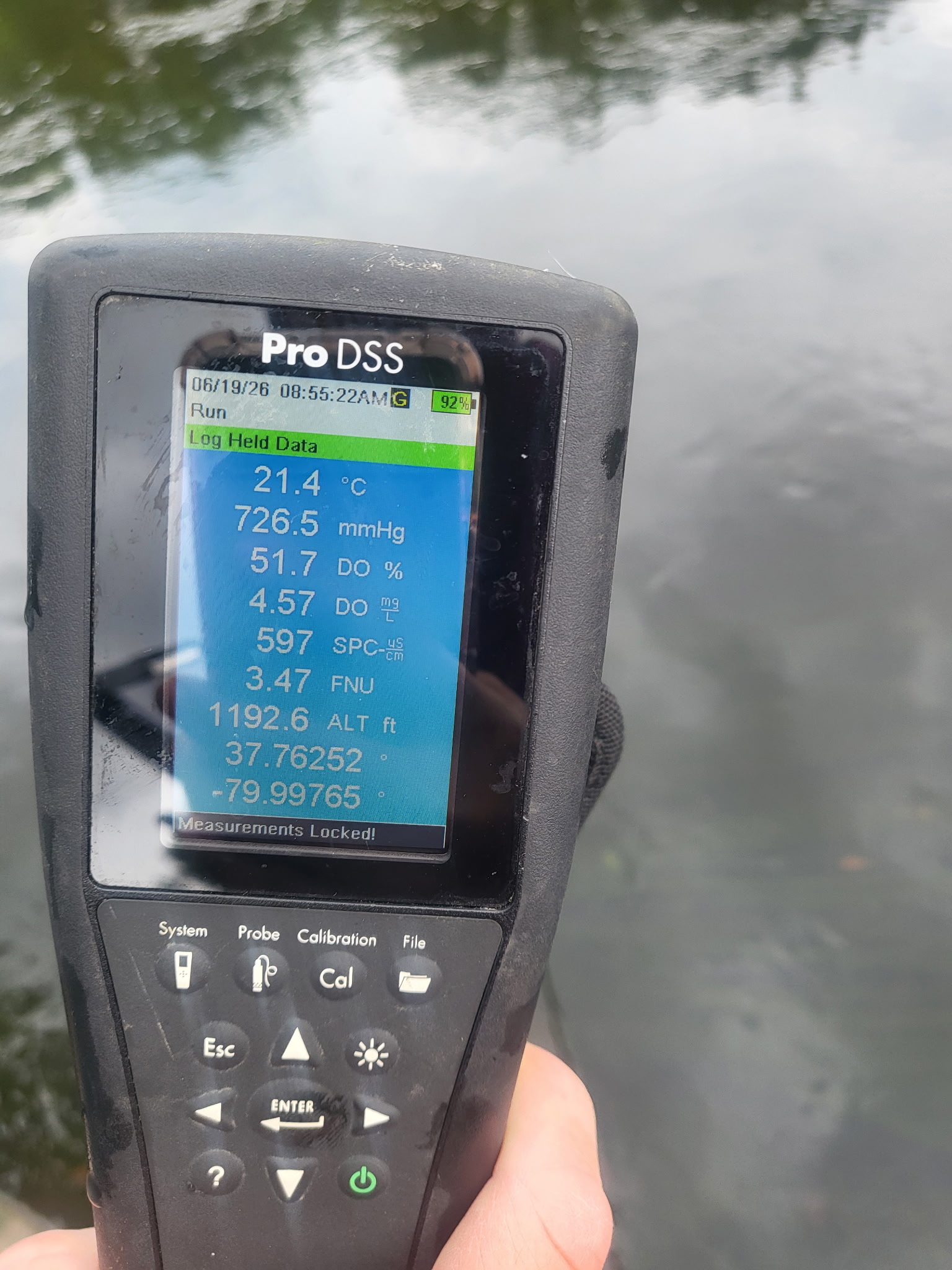
Low DO readings continued below the mill, off and on, for several weeks. Sites upstream showed no such drop. At Fort Young Park (JAC-7), we recorded 63.8% saturation on June 11th and 56.9% on June 19th. That same day, the Jackson River Sports Complex (JAC-6) dropped to 51.7%. Fish and the insects they feed on depend on oxygen dissolved in the water, and readings like these put them under real stress.
DEQ’s review found that the mill took proper corrective measures. We see it differently. By the mill’s own account, its wastewater plant took four days to recover, and our data show oxygen below Covington stayed low for weeks after that. It’s a question we’ll be raising as the mill’s discharge permit comes up for renewal.
The incident drew attention beyond our monitoring. WDBJ7 News covered it in July as part of a broader story on the river’s darkening color, featuring ABRA alongside the James River Association and local fishing guides. The Daily Progress followed with its own story, which sparked more conversation around town.
Two sites, three miles apart
This fall our team completed 17 benthic macroinvertebrate surveys, sampling the “river bugs” whose presence or absence tells us a lot about a stream’s health. Eleven were in the Cowpasture watershed and six in the Jackson. The most striking result came from two Jackson River sites less than three river miles apart.
At Intervale (JAC-9), we found a healthy mix of pollution-sensitive organisms. Just downstream at City Park in Covington (JAC-8), the picture was completely different. Andrew Young summed it up:
“Covington City Park was horrible. We got 700+ flatworms, about a half dozen leeches (which I had never seen), lots of sow bugs and scuds. Not a single mayfly. It is by far the worst benthic survey result I have ever seen.”
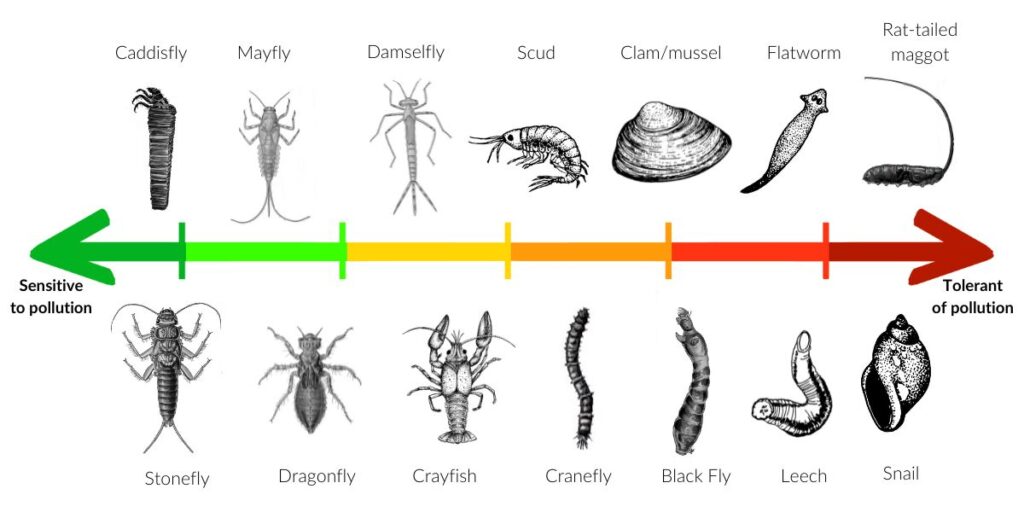
Above Intervale, the Jackson flows mostly through forest and farmland, with Lake Moomaw farther upstream. Between Intervale and City Park, nearly all the land on both banks belongs to the paper mill, apart from a few city blocks and the park itself. Our crews have also noticed more trash and heavy algae growth below the mill, from City Park down to Fort Young Park. And as Andrew told WDBJ7 this summer, conductivity below Covington runs consistently higher than upstream, at levels EPA considers harmful to aquatic life over time.
One survey can’t establish a cause, and the mill isn’t the only potential pollution source along this stretch. But the result is consistent with what we expected to find downstream of the major industrial facility. We’ll repeat these surveys in the spring.
A July spike on the upper Cowpasture
For the first half of the summer, E. Coli levels were generally well below Virginia’s safe-recreation threshold. Then on July 1st, E. coli spiked at three widely separated sites: two in the upper Cowpasture watershed and one where the Cowpasture and Jackson form the James at Iron Gate. There the reading topped 43,000 cfu/100mL, more than 180 times the safe-recreation threshold of 235! On the Bullpasture River, readings hit nearly 4,500 cfu/100mL on the same day. Sites in between were nearly clean that day, though levels across the upper Cowpasture stayed elevated into mid-July.
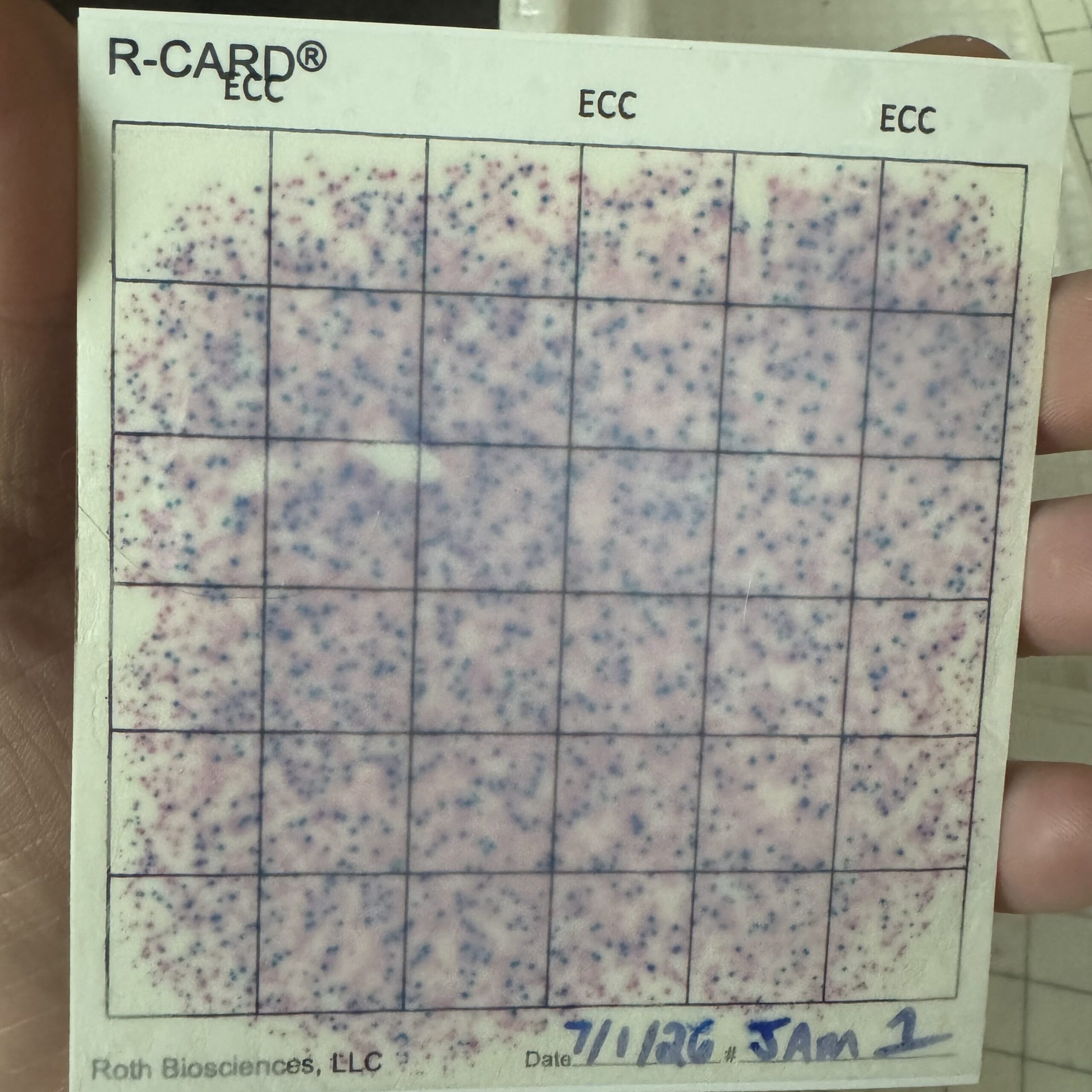
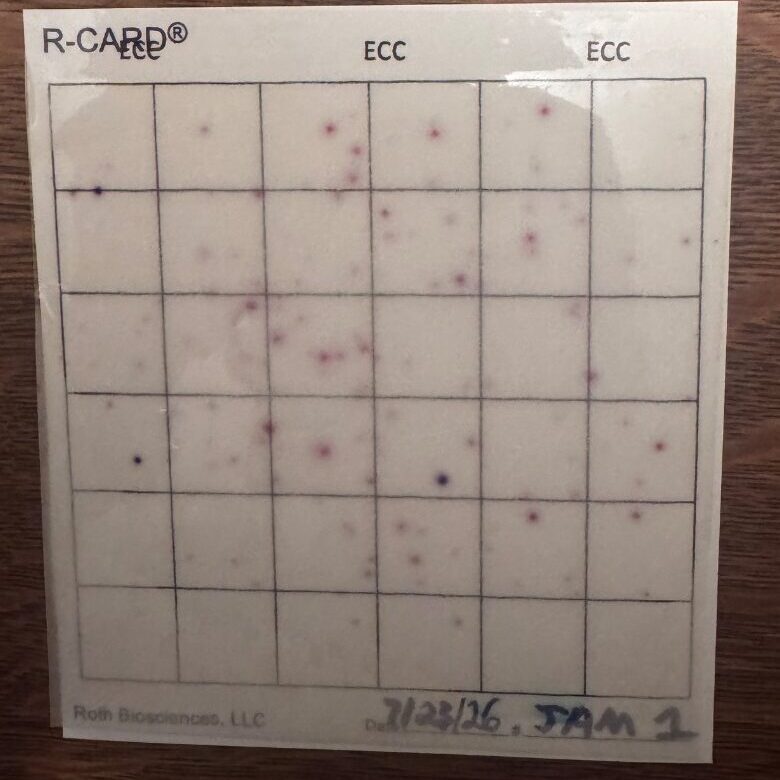
We reported the readings to DEQ, which said it could not investigate until after the holiday. No follow-up investigation took place. Andrew Young spent much of the July 4th weekend resampling the area himself. All three sites had returned to near-normal levels, though E. coli across the upper Cowpasture stayed generally elevated through mid-July.
We don’t yet know whether this was manure application coinciding with localized rain or something less typical, and we’ll watch closely next summer to see if the pattern repeats. Without weekly sampling, this event would very likely have gone unnoticed.
The season in numbers
Our team has now collected 345 E. coli samples and 583 monthly water quality readings in 2026, at 44 sites across both watersheds. Counting the extra readings taken alongside summer E. coli sampling, that’s nearly 930 in all. Our 2025 data is already on our regional map, and 2026 data is on its way.
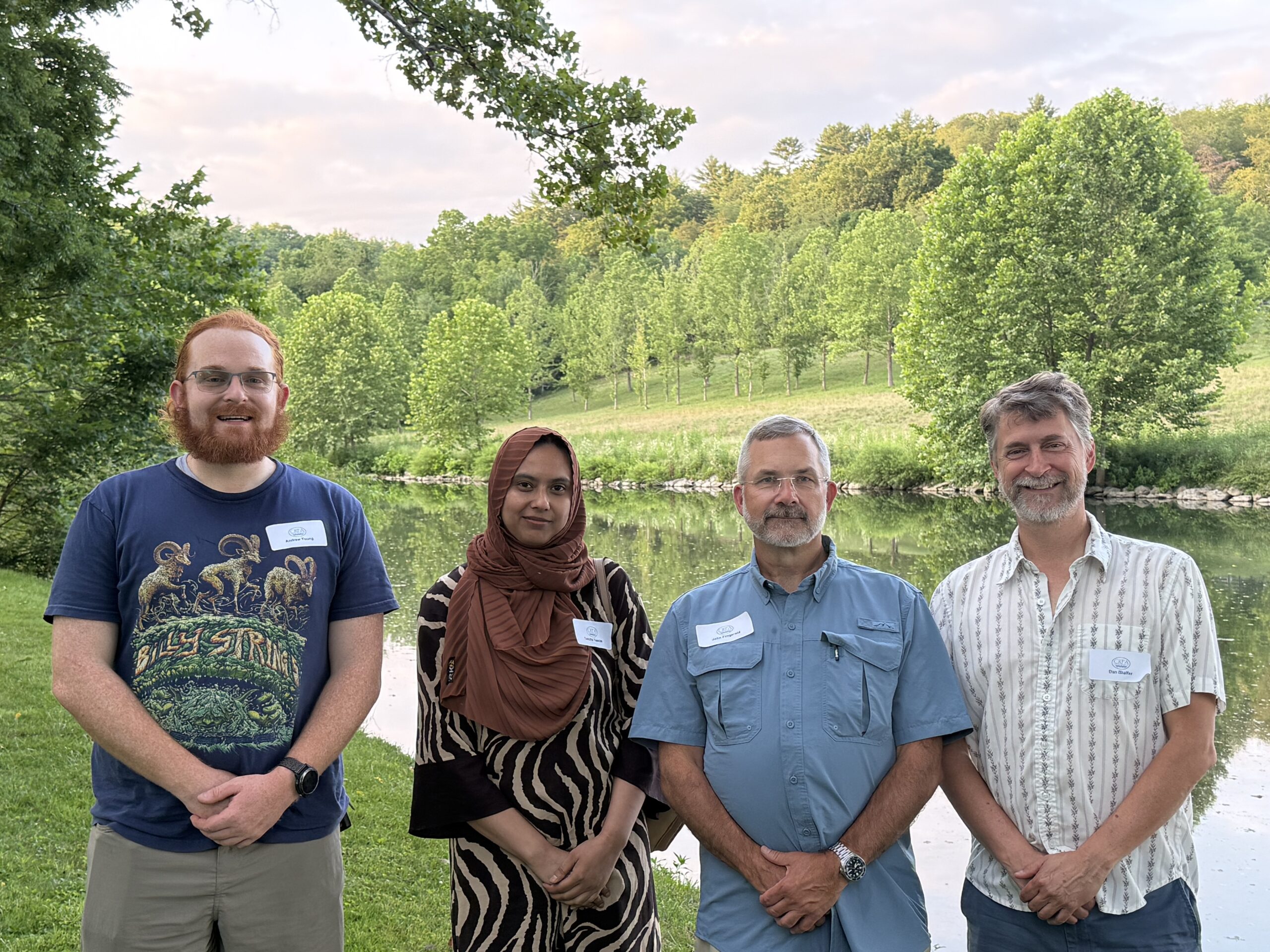
The team’s skills grew too. Jon Fitzgerald and Tanziha Tasnim are now certified Virginia Save Our Streams benthic monitors, joining Andrew Young, who became a certified trainer in August. In 2026, our team, with help from CRPA and Master Naturalist volunteers, performed 30 benthic surveys in the Cowpasture and Jackson river watersheds.
We also monitored one of this summer’s pulse releases from Gathright Dam. The U.S. Army Corps of Engineers releases these surges to flush out algae and sediment that build up in the lower Jackson during low summer flows. We did not find anything unexpected, from a water quality standpoint. But riverside residents report serious erosion during the releases, and many ask what else is carried downstream along with the algae and sediment, and where it came from. Our efforts are meant to help answer those questions, but that will require monitoring additional pulses and testing for a range of analytes.
Out in the community
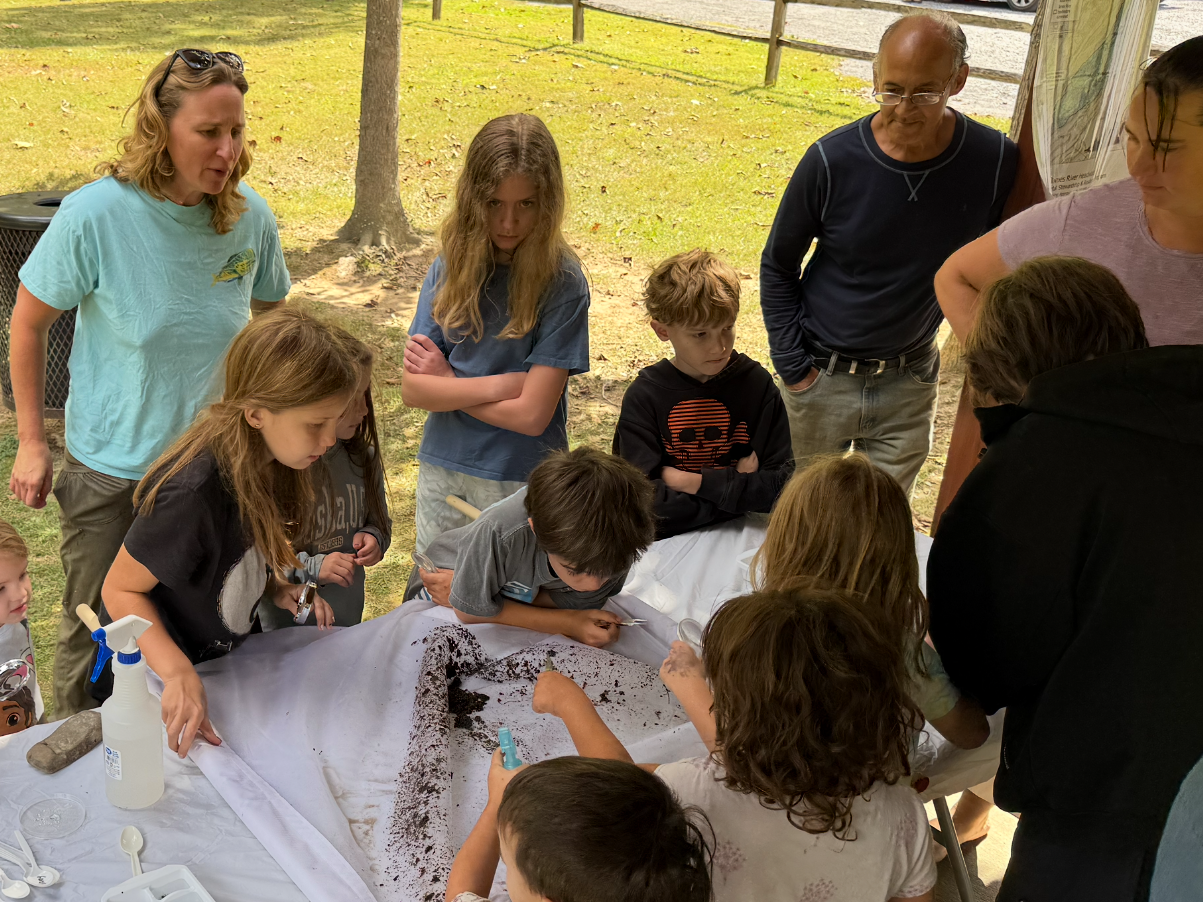
Youth education stayed at the heart of the program. ABRA repeated its afternoon program at Camp Mont Shenandoah, providing benthic, E. coli and YSI sampling demonstrations to 35 campers. Jon Fitzgerald reached more than 80 local kids this summer through the YMCA, the Boys Home, and Alleghany Outdoors. In September, Jon, Tanziha, and Andrew led a two-hour hands-on session in Sharon for a homeschool group of 18 kids and about 10 adults, exploring how river bugs reveal a stream’s health. Dan Shaffer will return this fall for a classroom follow-up.
We also spent the season meeting people where they are. Our team attended the CRPA and JRPA annual picnics, the Covington Farmers Market and Farm Fest, the Butler Cave Conservation Society open house, and the annual Gathright Dam review. Jon met with landowners across Highland, Bath, and Alleghany Counties, talked with Virginia DWR fish biologists, and swapped notes with anglers on the river during E. coli runs. Andrew also contributed an article to CRPA’s newsletter, The River Runs.
What’s next, and how you can help
The paper mill’s Virginia Pollutant Discharge Elimination System (VPDES) permit was last fully reviewed in 2017 and administratively continued in 2022. It’s now up for reissuance, pending DEQ review. Through public records requests, we’ve obtained the mill’s permit and discharge data from DEQ. In the coming months we’ll share that data, alongside our own monitoring results, on our Conservation Hub and in public presentations. We expect the official comment period may not open until as late as May, and we’ll be working in the community to push for a public hearing.
Here’s how you can help:
- Donate to support the work. Our federal funding for this program ends in April. Community support is what will keep monitoring going on the Jackson, Cowpasture, and James.
- Watch for updates on the permit. We’ll let you know when the comment period opens and how to make your voice heard.
- Volunteer for benthic surveys next spring. No experience needed. We’ll train you. Contact Andrew Young for more information.
- Share our updates. Pass along our posts and social media to your friends and networks. Chat about your river at a holiday party!
See you on the water!